
Welcome to Spreadlandia, where two veteran editors read it ALL to winnow out only the best: juicy yarns, big ideas, deeply personal essays, and hot goss—aka, the full Spread. Plus: original interviews, podcasts, and more. Come hungry!
Spreadsweets,
In case you’re losing sleep wondering whether we were off last week for Coachella recovery or because we’d caught airmono from all the airkissing at Milan Design Week, we’d like to set things straight: We were working asynchronously. We knew we couldn’t look Spreadlandia in the eye again without having wolfed down every high-pitched syllable of Lena Dunham’s Famesick or mainlined the full season of Beef 2. (Between hits, we also squeaked in a spring break trip to—drumroll please—Colonial Williamsburg! Please see Maggie for recommendations on the best ye olde ghost tours and turkey legs, plus a short history of the printing press, because you can take the girl out of the Hearst cafeteria but….)
Now that we’re back, we can confidently say it first-hand, to your face: Famesick is excellent—especially as read by Lena herself on the audiobook. Also: What if after 10 years of accruing wisdom, each of us got to spend 400 pages tastefully, thoughtfully, and with great stylistic panache setting the record straight on our twenties—clarifying every intention, repackaging every public relationship, sanding off some edges and polishing up others? Well, we’d all be so freakin’ exhausted we’d have to take to the bed Leanne Morgan style (or, you know, Lena Dunham style—though her physical ailments, which she enumerates in the book, are no joke).
Dunham’s telling of her young romance and partnership and the dissolution thereof with Jack Antonoff reads as unflinching and yet respectful—there are things that must have been hard to write, even for her—and her relationship with her brother, Cyrus, as depicted is nothing short of stunning. But it’s the buildup to and fallout from her friendship with creative partner Jenni Konner that stopped us in our tracks. It’s visceral, painful—and yes, we realize we’re using this term to describe Lena Dunham!—and brave: a serious entry into the canon of writing about friendships that burn hot and flame out. (Would we read a two-sided review of Mother Mary from LD and JK? Faster than Marnie Michaels would grab the mic at karaoke night.)
As for Beef 2, this is not a drill. As Lindsay Crane-Martín and Josh Martín, Carey Mulligan and Oscar Isaac nail a couple of Erewhon-frequenting, Hot Chip-loving, interiors-obsessing striver millennials like never before committed to screen. The couple they beef with, Gen Zers played by Cailee Spaeny and Charles Melton, are equally magnificent. When it comes to laser-sharp cultural critique, The White Lotus better watch its back.
Steak knives out,
Rachel & Maggie
P. S.: Tonight’s New Yorker newsletter features a Devil Wears Prada Part Deux convo between Naomi Fry and critic Justin Chang that is so Spready, we had to toss it right in here at the eleventh hour. Fry’s opening salvo: “If you’re going to do a movie about the magazine business right now, you would be remiss not to accept the facts: everyone’s on the internet, no one buys magazines anymore, print is dead, we live and die by clicks. And what do we do when business is dying? We depend on mercurial billionaires to come save us. Come save us so we can keep doing these Sisyphean, no longer lucrative jobs!” Read Chang’s review here.
P. P. S.: Tell us, are you going to see the movie in theaters? Dressing in costume? Waiting for the streamer? Never in a million?
When Skin Is In
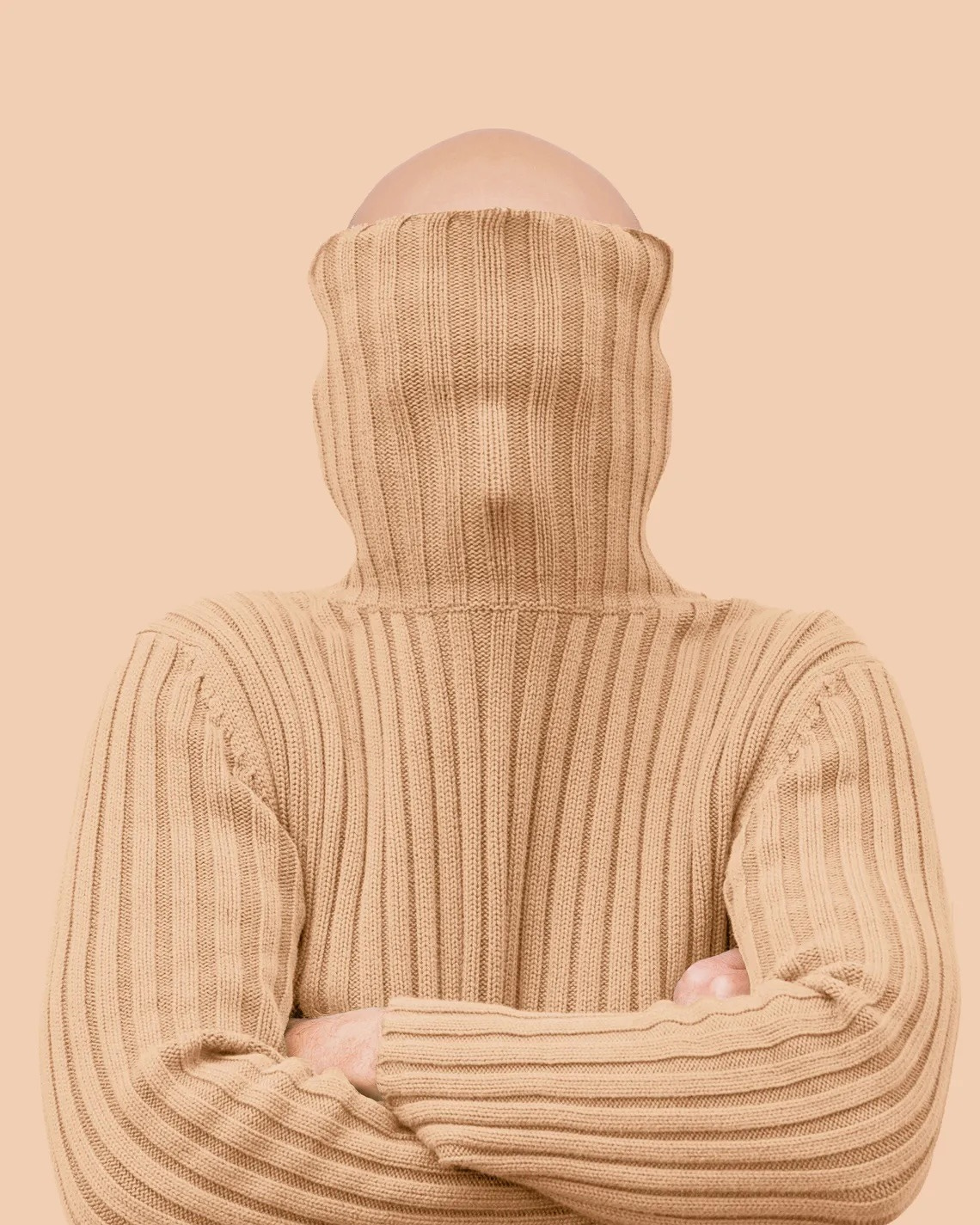
A sentence we never thought we’d write: We’ve been thinking a lot about baggy foreskin this week. Like, a lot a lot. And we have New York magazine—our nation’s longtime chronicler of what’s new in the circumcisionsphere—to thank. In “The Men Who Want Their Foreskins Back,” Bianca Bosker profiles restorers (go ahead, try to say it aloud: The Rural Juror was a restorer) i.e., circumcised guys who to varying degrees feel like they’re missing something—and are doing something about it, whether through surgery or more manual methods, which include stretching devices and the most down-to-basics tactic: tugging. Some men seek superior sexual satisfaction, some a sense of bodily autonomy, and some just like a more generous, um, drape, a preference that has apparently been around for thousands of years: The Ancient Greeks were foreskin maximalists. In closing, we learned a lot today.
Read it here.
Our plastic-surgery-story diet starts today.
Sick of reading the words plastic surgery here? Good, because we’re getting pretty tired of writing them . It used to seem like a certain sort of progress when “even” the august Atlantic would get its feet wet in the fish-nibbling pedicure pool of beauty journalism. Now it just feels like piling on. Rheana Murray rounds all the well-trod bases of the new “confessional era” of celebrity self-customization to ask a (somewhat) new question: In revealing the exact cc’s of their implants and the location of their incisions, are famous people actually delivering us all a handy how-to guide? Also: Is this transparency just a ploy to conjure authenticity, i.e., likability? (Hold the phone: Were we just duped into high-fiving Denise Richards?!) But Zoe Dubno’s piece in the Cut—similar ideas, very different tone—felt both refreshing and shockingly overdue. “Stop the insanity,” as Susan Powter once screeched. Dubno documents the ever-higher time and money investments of “basic” maintenance for regular women—never mind the peptides-pumped lifestyle of the longevity-obsessed. It may be deeply unfashionable to shame a woman for her self-care routine these days, but baby: If your morning skincare takes three hours, maybe you need to find something better to do with your time?
Read “The New Plastic-Surgery Playbook” in the Atlantic here.
Read “I Spray Myself With Magnesium and Read Under a Chicken Light” in the Cut here.
Paying to Play at Mary Kay

In the biopic of beauty empress Mary Kay that is surely in development by somebody, somewhere, the Spread would like to cast the sorely underutilized actress Miss Piggy in the role of a lifetime: a Dallas-era power player in a “capacious blond bouffant wig that perilously topped her tiny frame and sky-high stilettos” who lives in a pink mansion with a “bathtub the size of Switzerland.” Mimi Swartz offers a dual review of Mary Lisa Gavenas’s glowing, 15-years-in-the-making (!!) Selling Opportunity: The Story of Mary Kay alongside Bridget Read’s far more skeptical investigation of the business model of Mary Kay, Amway and Herbalife), Little Bosses Everywhere: How the Pyramid Scheme Shaped America. Kay, a Texan down to her (pink) toenails, built an empire run mostly by women. The sell: “If you worked very, very hard, your reward could be the era’s stereotypical trappings of hitting it big, ladies’ version: furs, diamonds, your own mansion, and, of course, a head-turning pink luxury car.” But your chances of achieving that success were roughly equivalent to a gambler in a casino. In Canada, where such facts must be disclosed, 85 percent of Mary Kay consultants earned zero commissions in 2022. The house always wins.
Read “How Mary Kay Built a Billion-Dollar Empire” in Texas Monthly here.
