
Welcome to Spreadlandia, where two veteran editors read it ALL to winnow out only the best: juicy yarns, big ideas, deeply personal essays, and hot goss—aka, the full Spread. Plus: original interviews, podcasts, and more. Come hungry!
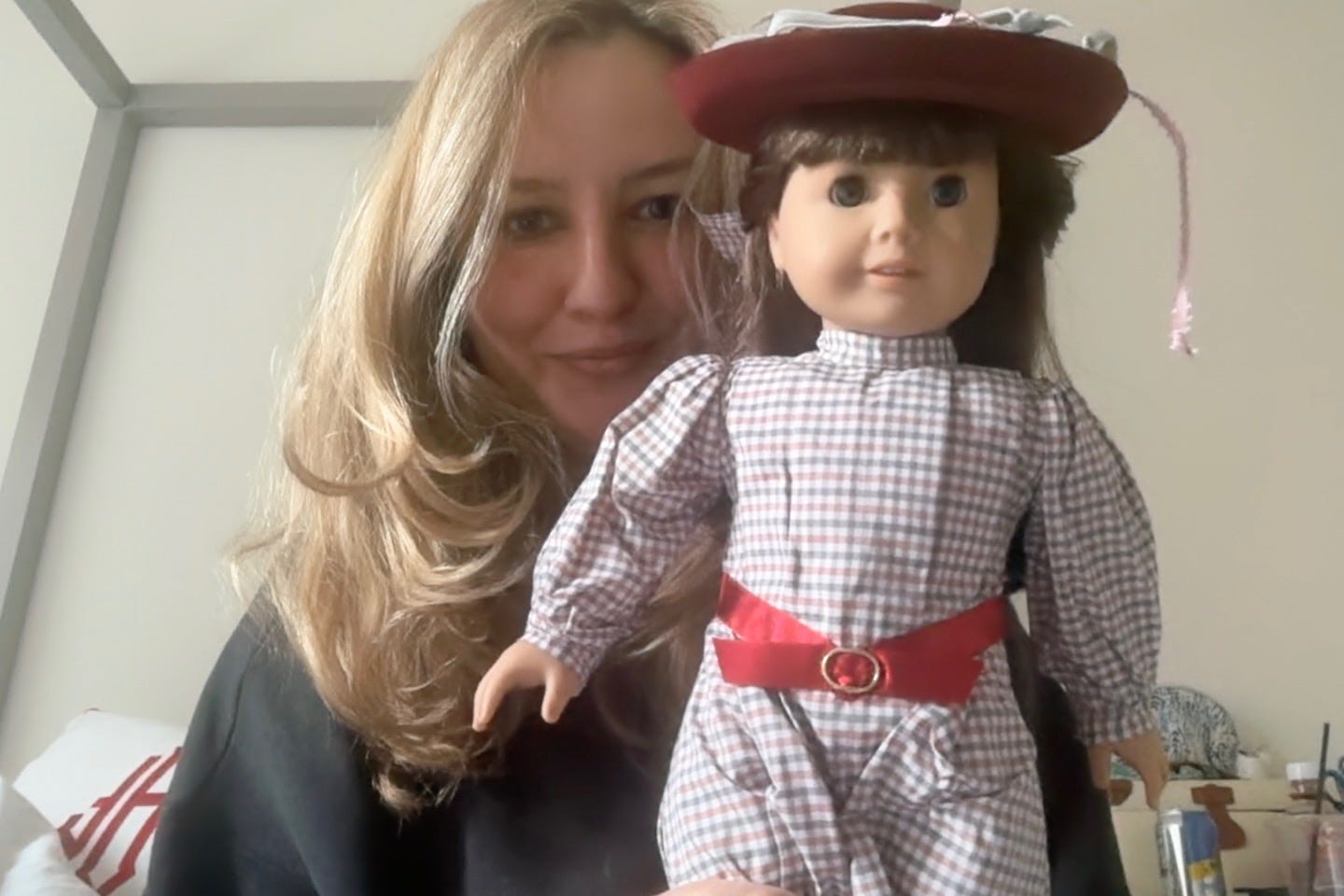
Spread dolls,
Tonight we are joined by friend, colleague, loyal denizen of Spreadlandia, and An American Girl: How a Billion-Dollar Doll and Its Unlikely Founder Changed Girlhood Forever author Amanda FitzSimons. Amanda, whom we met on staff at Elle almost exactly 15 years ago (gulp!), is as good a reporter as she is a tequila drinker—which is to say, excellent—and we can’t wait for the world to get their mitts on her juicy cultural interrogation of this country’s best-selling 18-inch doll, which hits bookstores and mailboxes Tuesday (preorder it here). Over air tea and plastic cucumber sandwiches, we spoke to Amanda about celebrity superfans, the brand’s racial legacy, and why some of us (ahem Rachel) take these hunks of plastic so dang personally.
And keep scrolling: Because we love ya more, we also rounded up a quick-hits™ list of the week’s Spreadiest magazine reads.
Eat your hearts out,
Rachel & Maggie
As American As a Tiny Slice of Pretend Apple Pie for $6.99 Plus Shipping
Ladies and gentlemen, please welcome author Amanda FiiiiiitzSiiiiimonnnnnns!
Spreaditor Rachel: Amanda! Thanks for emerging from the planet of Goodreads—that’s where authors hang out the week before their books are published, right?—to join us in Spreadlandia.
Amanda FitzSimons: Thanks for doing this! OK, so did you have the dolls growing up?
Yeah, I’m a Samantha.
My original dolls were Molly and Kirsten. Samantha was the bestseller in the mid-’90s by leaps and bounds. [A box-fresh Samantha doll magically appears on the Zoom.] But do you know what was the bestseller in the American South, where you lived? Addy. By leaps and bounds.
That’s so interesting. Addy was the first Black American Girl doll, right?
Yes. The original four dolls were all white and Christian. They had last names and were very white and WASPy—not even, like, Italian—and Christian: Kirsten Larson, Samantha Parkington, Molly McIntire, Felicity Merriman. They had Christmas books and Christmas lines, so nothing deviated.
Not great in the larger sense, but savvy marketing-wise: The Christmas clothes and accessories were wildly popular. Those nightgowns!
Exactly. The beats in a nine-year-old girl’s life—back-to-school, birthday, Christmas—neatly aligned with marketing opportunities. Grandparents were also huge purchasers, and grandparent characters featured prominently in the books: Samantha Parkington was an orphan raised by her Grandmarie, and Grandmarie buys Samantha an expensive doll in the book itself! A slam dunk.
Anyway, Addy was launched in 1993, which was a moment when people were thinking about race: Rodney King, Crown Heights, Anita Hill. Addy was developed alongside an advisory board of Black academics—including Lonnie Bunch, who just left the Smithsonian—and endorsed by Oprah. Unlike Black Barbie, which was marketed to Black children, Addy was marketed to both Black and white children, which was unusual and you can see one prism through which it’s a triumph. But the character was an escaped enslaved person, so there’s the complicated part where white girls are buying a doll whose backstory involved slavery. The sales data showing her regional popularity in the South likely reflected affluent Black families in cities like Atlanta, as well as broader reach. When I went to interview white women who bought Addy dolls, none of them would talk to me on the record using their names. Of the Black women I talked to: Some people still love her, and some have really mixed feelings.
When Oprah featured Addy on her show, Pleasant Company’s phone lines crashed from the response of 14 million daily viewers.
The phone lines! The catalogs were important growing up.
Yes, I’m totally addicted to the catalogs. Originally, they were the only way you could buy the dolls. That was unusual for the time; no other toy company operated its own direct catalog except Madame Alexander and that was on a smaller scale. The company founder, Pleasant Rowland, controlled how American Girl was positioned—no pink or purple in early catalogs, only maroon and beige, inspired by Victorian Sears, Roebuck-style catalogs. They were really well-produced.
But in 1998 or 1999, the company sold to Mattel for $700 million. Now all of a sudden it’s brick and mortar, and people who weren’t getting the catalogs, who didn’t have daughters, can see, like, how people interact with these dolls. A bachelor on the way home from work in Chicago can see people queuing up with lines around the block. In the Barbie movie, Will Ferrell has a line that’s, like, “Mattel had a female CEO once in the ’90s?” Well, yeah they did; It was Jill Barad, who bought American Girl.
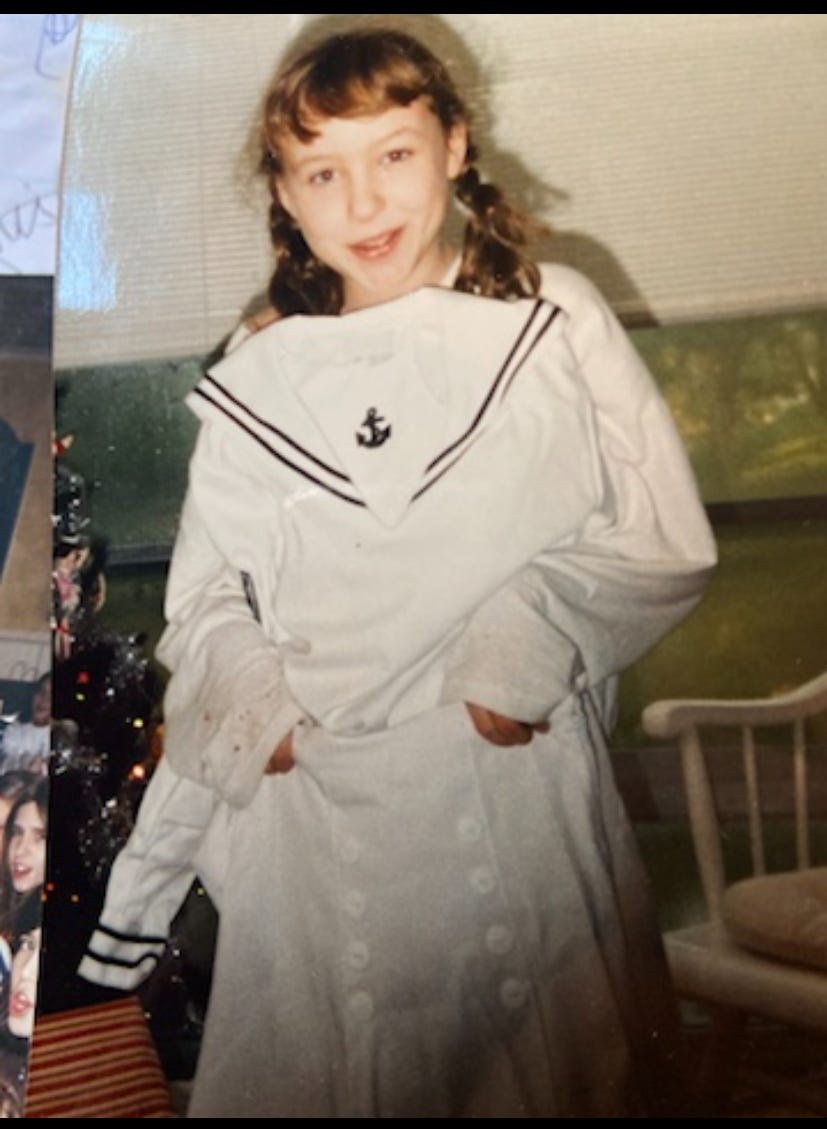
How much research material did you acquire for the book?
I started buying vintage catalogs on Etsy. I had them on my coffee table when friends came over, and they’d spend hours looking through them. Hours! I also bought this $200 Samantha doll recently for my book party.
I totally would have loaned you my Samantha.
That’s very kind, but I was worried about taking someone else’s to the party because they are so sentimental! I can’t replace your Samantha.
One thing that’s been fun in reporting the book is that I can tell how old someone is based on their American Girl references—like, if your references start with the store, you’re probably also just now starting with Botox: You’re 32.
Before there was the generational cliché of whether you’re a Carrie, Miranda, Samantha, or Charlotte from Sex and the City, it was whether you were a Kirsten, Samantha, or Molly. Samantha’s items felt more romantic and aspirational, like an eldest daughter type compared to Molly with her pigtails and stripes.
Absolutely. Samantha was a catch-all because she had brown hair, which represented a broader demographic of white girls with dark hair. Samantha was the wealthy girl with nice accessories, like the famous 1991 birthday wicker set that cost $250 back then. The look was supposed to remind you of, like, that Secret Garden era. Molly felt more grounded and familiar to me. Today, the brand includes licensing deals—like Frozen or Wicked—and customizable dolls, shifting away from purely historical character narratives.
My sister was blonder and looked like a Kirsten, so I default-identified as Samantha.
I did hear from a lot of people that the older sister had the Samantha; I think part of that is because most people thought Samantha was the best one, so the older got the good one. It’s interesting because there was so much girl power going on in the ’90s—girls playing soccer and stuff—and then you have this wildly popular doll line about old-timey girl power, when girls hewed much closer to gender norms than ’90s girls. A weird, complicated way of celebrating girlhood.
It sounds like a little bit of a prequel to trad wife fever.
Yep, that’s in the book. There was a lot of crafting stuff in the American Girl line. Crafting was huge in the ’90s. You know, like, looms, lanyards.
You sold the book proposal to Simon & Schuster right after the Barbie movie came out for what has been rumored to be a whole lot of money for a first book. Did you think of Barbie as a foil while you were working on the book?
Yes, Pleasant Rowland explicitly built American Girl as a higher-end alternative to Barbie in the ’80s. Barbies were cheap—like under $10— whereas an American Girl doll was around $68 when they launched in 1986. They’re $195 apiece today. That’s roughly eight times the price of a Barbie. Barbie remains the #1 global doll, while American Girl is #2 domestically.
There’s such a hardcore American Girl doll cult out there. How much of the book is about the cult versus the company’s story?
The cult’s significance progressed even while I was writing it. The adult subculture—which is referred to as AGIG on social media—surged in 2020 during the pandemic, driven by nostalgia, meme accounts, people with extra time on their hands at home, and podcasts like Dolls of Our Lives, which was hosted by two historians who said that the American Girl dolls are what inspired them to go into the field.
What was your most exciting reporting scoop?
Through someone in my Pilates class, I ended up meeting Carrie Toll, a PR executive in Brooklyn who was the actual child catalog model for Felicity’s clothing line back in the ’90s! It was incredible.
