
Welcome to Spreadlandia, where two veteran editors read it ALL to winnow out only the best: juicy yarns, big ideas, deeply personal essays, and hot goss—aka, the full Spread. Plus: original interviews, podcasts, and more. Come hungry!

Sun-kissed Spreaderiñas,
Believe it or not, your Spreaditors do not agree on everything. But if you asked us to name the one person with the best job in the magazine biz, we would answer immediately and in unison, like the twins in The Shining: Brock Colyar. New York Mag’s reporter-with-the-mostess has brought us such Spread-beloved fare as “The Big Little Penis Panic,” “It Must Be Nice to Be a West Village Girl,” and “The Cruel Kids’ Table,” aka, “The Cultural Ascendancy of the New Right.” Not to mention the current cover story, “It’s Humiliating. It’s Exhilarating. It’s a Line,” about those patient and possibly unhinged souls lined up 100-deep on NYC sidewalks in pursuit of Froyo transcendence. Ever since Brock volunteered to spend a month in the bowels of the city’s pre-vaccine COVID-era underground nightlife scene, landing their first cover story—and a nightlife column called “Are U Coming?”1—while they were still an assistant (rare!), they’ve been in the business of defining the zeitgeist. And when they put their finger on a thing, they have a way of bringing it to life with a blend of humor and generosity that is both kind (or at least fair) to their subject, but also to their reader. Brock is the rare insider who shares the view from their perch without making you feel bad about being all the way down on the ground. All this, at the tender age of 28! Don’t bother trying to hate them for it—they’re too lovely.
Don’t worry, we’ve also got your reads of the week.
To make sure maximum eyeballs enjoy Brock’s Spread debut, we are lifting the paywall this week! Come one, come all, to the bonanza. And show a little ❤️, why doncha?
XOXO,
Rachel & Maggie
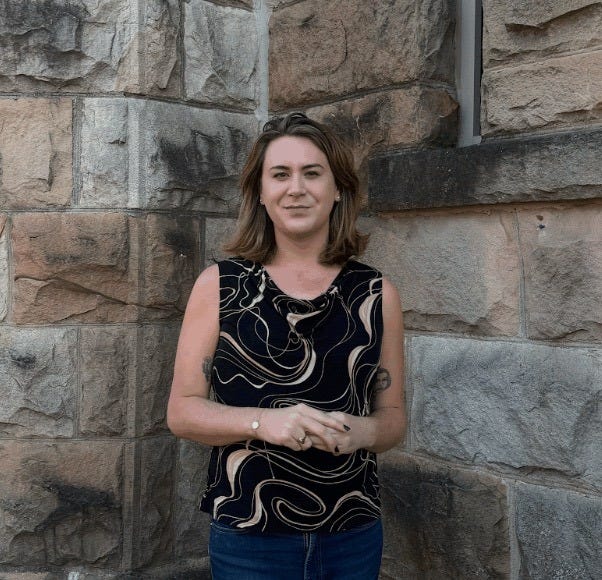
Brock: Oh my gosh, so nice to meet both of you. I feel like I’m meeting like my long-lost aunts or something.
The Spread: You are, you definitely are. We’re huge fans! And now that we are aunties, we can share that your story about waiting in lines made us feel like oldsters. When we walk past line-waiters, we’re like, “What is wrong with these people?” Did writing it turn you into a line person?
Brock: Not necessarily, it’s too embarrassing. But there’s only so far you can take a conversation with a line person because [why they’re doing this] seems so obvious to them. It’s not so much, “I’m joining in the crowd.” It’s, I’m trying to see for myself if this is as good as other people say it is. At least I’m not at home. Or: I just wanted dessert. The obviousness of their answers started to warm my heart. I just thought, Well yeah, you’re doing better than me tonight, why am I looking to take you down?
The Spread: How would you describe your beat? In some ways it’s so broad, and in some ways it’s so clear, like, “Oh, that’s a Brock story.”
Brock: Back when I had the nightlife column, I would say my beat was subcultures. I was doing it through the prism of nightlife, but it was stories taking readers into corners of the city they would otherwise not know about, and that I would otherwise not have access to if I didn’t have the privilege of having this job. Often I tell people that I write about young people, which again is so vague. It’s hard to define, but when it’s a story I want, I know it. I loved the lines one because, in the same way as the West Village girls story, it was about young people, their consumer habits, and also the lived landscape of New York City—and the internet.
The Spread: “The Cruel Kids Table” story about young conservatives celebrating Trump’s second inauguration—we wrote about that twice in the Spread, it was just so vivid. But also, as your aunties, we felt protective. Like, had New York fed Brock to the wolves?
Brock: Yeah, some of my editors were a bit concerned they were sending me there. I have to tell you, I look back at it as one of the great experiences of my life. Being at the inauguration—there was something freeing about it. I was there to do a job. I could just throw myself into doing this thing. I had some dark moments in my hotel room, crying and drinking, really overwhelmed by everything I had seen or that people had said to me that day. They talked about my gender and my presentation a lot in front of me, but a lot of the people hated me more for being a journalist than for being queer. So I didn’t feel uniquely targeted. Many of the people in that story are still sources that I talk to somewhat regularly, just to figure out what’s going on in their world.
The Spread: How did they react to the story?
Brock: I’d say it was 50/50, and I could not have predicted which ones would have been mad. In trying to be really transparent with these sources—and not make any of them so mad that they’d really go after me—I told them ahead of time: Some of you are going to think that I’m just a lefty hack who came into your world and tried to tear it apart. And other readers will think that I overglamorized you, and that it makes you all look kind of fabulous. And that is just how it split. Some felt really glamorous about it, some felt like I was an asshole.
The Spread: Reading your stories, it always feels like you develop empathy for the people you’re covering. Were you able to develop that for the young conservatives?
Brock: I grew up in a small town in the middle of Tennessee. I have MAGA people in my family, I talk to them all the time. There were people in this field who were upset with me just for going there and talking to these kinds of people. I find that so ridiculous. In order to get anything out of young MAGA people like that, I couldn’t just go around these parties throwing a recorder in their face and questioning them about their take on trans rights. I had to maybe have a cocktail, talk about where we were both from, how they were dealing with the weather. Small talk. Often we’d talk about the excesses of the left—that was an easy thing for me to complain about, that they also wanted to complain about. I think that lent a certain amount of—I’m trying not to use the word “empathy,” but… humanness.
The Spread: It’s not every assistant who hits the ground running, writing cover stories. Did you have a champion at New York—somebody who was like, “This kid can report a cover story”?
Brock: I was the assistant to [New York editor-in-chief] David Haskell, but previous to that, I interned for Stella Bugbee when she was running the Cut. It was kind of the height of #MeToo, and the Cut was doing such interesting work, and I was a Rebecca Traister superfan. Stella really took me under her wing. Then Carl Swanson, who was an editor here for a long time, really taught me so much about how to have fun on the page and just how to write. Before that, in college, I was an intern for Peggy Orenstein when she was reporting her book Boys and Sex. She’d interviewed me for the book—I’m a character in it—and we quickly bonded. I was really into feminist-y journalism at the time, and had just done an internship at Ms. magazine. Peggy taught me how to scene-report. She would ask me to go to, like, a frat party on Northwestern’s campus and find some boys and take them back to their room and interview them about their masturbation habits and what categories of Pornhub they liked most—to just be fearless and ask all these ridiculous questions. So I’d be on some frat house floor, passing around a bong with my recorder on the table, and a bottle of vodka that I would bring that Peggy would pay me back for, and talk about how they jerked it. That taught me everything, really.
The Spread: As ex-New Yorkers who still identify as New Yorkers, we rely on you to tell us what’s actually happening. People are talking about this sort of “New York-aissance” happening under Mamdani, and the post-Knicks high. Is that just a media fantasy?
Brock: I think it’s a little bit half-and-half. There’s certainly some excitement here. I went out and watched the World Cup games on the street over the weekend, and there was something kind of thrilling about it. It feels vibes-y again, but not to the extent that the media is telling us. Because what’s also happening is—and here’s the less generous view of the line people—the city just feels completely impossible: You can’t get a reservation anywhere, the lines are bananas. When I wrote the West Village girls story, my neighborhood, Greenpoint, had not quite been touched; now it feels like Greenpoint is all lines and West Village girls. The influencer-ification and same-ification just continues to creep farther and farther out.
The Spread: It’s very difficult to translate “vibes” into a magazine story. What’s your process of collecting feelings and ideas, and then translating them into stories? Are you like Tina Fey with her little notebook?
Brock: I take a million notes, and I talk to everyone. When I’m working on a story, I am at every dinner, every drink, every five-minute run-in with everyone I know, bringing it up in the most annoying way possible, and just collecting everybody’s feelings about it, and then I can form my own. The most helpful thing is the magic whiteboard in the middle of my kitchen, the main room of the house. Everything goes on it. I have to look at this whiteboard every day, and after we’ve spent a month together, I can spin a story.
The Spread: Every micro-generation in New York has their It Girl reporter, and you’re so the one of this micro-generation. Are you in touch with your forebears—people like Vanessa Grigoriadis?
Brock: Yes and no. I mean, I know many of them. I have drinks with Candace Bushnell every five months or so. I’ve been trying to talk her into doing a podcast together.
The Spread: While we’ve got you, can you decode this reel for us? We’ve both watched it like 20 times. Is it trying to tell us something, or is it just a nice thing to look at?
Brock: I think this is just a nice thing for the girls and the gays to obsess over. It almost feels like you’re about to choose your avatar in some kind of game. Like the Harry Potter sorting hat: It makes you want to figure out who you are by the end of it. I’m watching it for the second time in a row right now. It’s hard to stop.
The Spread: As Chronic Overthinkers, we were trying to layer in ideas about how these clips were from Charlie Rose, and—speaking of the sorting hat—we know he’s been sorted into the “bad” category. Plus all the women look kind of hesitant or guarded. So we thought maybe the reel was saying that all these women were on to him—like they knew? But you’re saying, no, it’s just that they are famous beautiful women, and this is a good backdrop?
Brock: I think this is just the kind of thing that guys I know are sharing and saying, like, “mama,” “mother,” whatever. People are just commenting with a diamond emoji, you know. Mark Guiducci is thumbs-upping a comment that says, “this is cinema.”
The Spread: Thanks for reigning us in. Our readers know that we’re both Southerners—Rachel’s from Mississippi and lives in Virginia, Maggie’s originally from North Carolina though she lives in the godless North now. Do you feel like your Southernness is one of your strengths?
Brock: I’ve often said that my Southernness is a bit of a superpower, especially in an industry of Yale-educated rich kids who have never had a conversation with someone who didn’t agree with them politically. Also the accent—do you know how I kept myself safe in DC? I went really hard on an accent I don’t have anymore, but it threw people off. Even just telling people I was from Tennessee, I instantly gained favor with them—telling them, “Oh, my brother’s MAGA,” or whatever. So I put on my accent, the same way I put it on when I go home, and that helped.
The Spread: Growing up in the South, you do learn how to be nice to just about anyone. Going back to that idea of you being the “it” person of your generation: You bring real kindness and generosity to your subjects, whereas previous generations of people doing jobs like yours were notably snarkier. Is it how you do the job, or does it reflect your generation, something in the culture?
Brock: I think it’s me, and just how I grew up. It’s funny though—something I’ve always appreciated about you guys is that I feel like you are my rare readers who see where I’m trying to be a nice person, trying to be a generous person, because I think the standards of journalism are sometimes so low: The Twitter response to my stories is only focused on the bitchy parts. When I had the nightlife column, I was upsetting people on a weekly basis, and everybody was acting like I was being a total bitch, just blowing up their spot over and over again. It upset me, because that was never what I was going for. It would be so easy to have gone after the line people as a bunch of tourists and lemmings. But that wouldn’t be very interesting.
The Spread: We are happy to be your closest readers. Feel free to give us a heads-up when your next story is coming.
Brock: My head is down on my book for a little while—
The Spread: Oooh, a book?
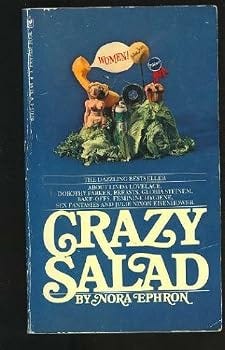
Brock: It’s called Gender Bender. It kind of came out of the essay I wrote about pronouns years ago. Every chapter takes on a different queer topic, whether it’s asexuality, or gay sex, or pronouns, or furries. I want to do something like Crazy Salad,2 but for queers—trying to say something about this generation and the way it’s talking about gender and sexuality, which I don’t think anyone has really done in a way that wasn’t totally activist-y.
The Spread: Can’t wait. Do you have a pub date?
Brock: I think late next year is what we’re working toward. Today I’m working on my chapter about furries, another topic I thought I would come away from feeling really disturbed by. Instead I’m like, oh, there’s sweet people who want to dress as animals. It’s OK.
Thank you, Brock! Your stories are so good, we would even wait on line for them. Spreaders. hope you saved your appetite: On to this week’s reads!
Why Don’t You Put on Your Sunbonnet and Read a While?
OK, But When Will Claude Be Able to Do the Laundry? Persona non grata to the Burden Bellas—aca-scuse-us: no other Strangers stans around here are also big Pitch Perfect fans?—Jessica Winter’s latest considers the new wave of family-targeting AI assistants aimed at siphoning off (and we appreciate the honesty here) mothers’ cognitive loads. Experts aren’t convinced this is the key to marital equity (shocking, right), and yet: Rachel is still considering a Skylight, so please share a review if you feel passionately, preferably before school starts on August 12. Read “The A.I. Gender Gap Meets the Parenting Gender Gap” here.
D.A.R.E. to Read: Though its headline sells it as a Weeds-ian romp, “The Accidental Cartel Queen” is a depressing-as-hell cautionary tale in which journalist Julia Lindau traces South Carolina waitress Chelsie Marie Anderson’s descent into a precarious existence as a drug dealer on the run in Mexico. Honestly, despite its extremely Spready headline, this is the kind of harrowing fare that only serious crime-story fans among us should throw themselves into. Anderson’s two daughters are still in South Carolina. Read it here.
And you thought it was only dudes: Longevity bro Bryan Johnson’s 30-year-old girlfriend, Kate Tolo, is joining him in monitoring every bit of her body’s input and output, so to speak, which she argues will give us useful science to understand womankind. Or maybe just rich-white-young womankind? Read it in WSJ here.
Mrs. Submissive Went To Town, Riding on a Pony… Somehow, we’d managed to avoid the teachings of The Surrendered Wife, which has—according to today’s New York Times—been saving marriages, bolstering the patriarchy, and/or wreaking havoc on women and feminism since 1999, depending on how you look at it. Author Laura Doyle believes that though women are naturally controlling, they can subvert those impulses in favor of “respecting” their husbands (no nagging, sex whenever he wants it)—et voilà: long-lasting, happy marriages for all! Unshockingly, MAGA loves it. More shocking: Women across the political spectrum insist it worked for them too. Read “Women Are Too Controlling, She Wrote. Her Message Still Resonates” here.
Brother, May I: We never miss a Daniel Bergner joint, and his recent New York Times Mag story is by far the bravest thing we’ve read all week. For a story about sibling therapy, he spoke to a half-dozen practitioners about the zeitgeisty and growing therapy trend and researched much literature on family dynamics. He also went to therapy with his own younger brother, Bob, and lived to write about it. It’s worth a read for anyone who has siblings, is partnered to someone with siblings or is parenting siblings. Read it here.
Can patterns of behavior pass from one generation to the next… like country homes and beer money? An actual Guinness decided to shake off “ancestral trauma” (duels, addiction, lots of deaths “under mysterious circumstances,” growing up gay in a religious household) by way of a “family constellations therapist” in British Vogue, and since this was as close as we were getting to a fresh drop on BritBox this week, we read it. Read it here.
“Our Beth” Because this is actually a Little Women Fan Blog, we’d be remiss not to mention Sarah Chihaya’s Vulture piece about becoming preoccupied with Beth March’s death as she stares down her own after being diagnosed with multiple system atrophy-C. We are really not being flippant when we say that we hope she’ll also treat herself to “The One Where Monica and Richard Are Just Friends,” the Friends episode in which Joey Tribiani takes Beth’s passing real hard. Read it here.
Department of Tardiness: We couldn’t believe it either when Pete Hegseth issued his testosterone decree within moments of us sending out last week’s issue all about manly man-juice and the ways they’re getting their hands on it. Honestly, we don’t want to be this timely.
Five-star weekend: In what may be the most tasteful second wedding of all time, Paulina Porizkova married a nice man in Italy. Excellent setting, very good dress, perfect makeup, a minimum of pretension, and a strong photo caption game (take note, brides: these things can be amusing!).
Amy Alert! We don’t know how to feel about the fact that the only media entity following Amy Griffin as hard as we are seems to be Billy “grab ’em by the p*ssy” Bush, whose podcast has devoted considerable airtime to keeping the saga alive—asking a lot of questions that no one else seems willing to, with a decidedly anti-Amy slant. (Interesting, because Bush is a Bush, and thus a cousin of Barbara, one of Amy’s great allies.) Close readers: As of today, he claims to have found the real Claudia, as well to know the identity of the Mr. Mason. He also maintains that a journalist he knows is working on a big, multipart story on Griffin, which hopefully involves some legit fact-checking since BB is decidedly a rogue agent with big conspiracy theorist energy. We would like to request that this alleged article be delivered in a respectable publication, in time for our August summer vacation reading. Chop chop.
Stop scrambling for the perfect weekend-hostess gift: Good Hair Day Pasta is here. (Shout-out to Spreader Anna who so generously put this on our radar—and in Rachel’s kitchen.)
The “Are U Coming?” Hall of Fame, According to the Column’s Author
On…“Tripping ’Til 10 a.m. with Hot Psychonaut-Therapist Mommy” (December 2021): “Perhaps the most insane night of my life, the one that I told my sweet mother not to read.”
On…“Clubland Fixture Kevin Carpet Does Not Get Off on Getting Stepped On” (October 2022): The one about “a perfect New York character.”
On…“I Go To an Actual NYC Frat Party” (November 2021): “Back when I was less haggard and could still pass for a college student.”
Hope you guys are reading Pamela Colloff's new book, Catch the Devil. (Forgive me if you've already written about it.) It's riveting. x