
Welcome to Spreadlandia, where two veteran editors read it ALL to winnow out only the best: juicy yarns, big ideas, deeply personal essays, and hot goss—aka, the full Spread. Plus: original interviews, podcasts, and more. Come hungry!
Sensational Spreadsters,
One Spreaditor to her family this week: “I cook every morsel of food that gets eaten in this house!” Another Spreaditor to her partner last week: “I do every inch of admin around here!” Folks, not only are we doing emotional and domestic labor like it’s going out of style, we also stand ready at all times to do a tight 10 on the topic. Same as most of you, we’re guessing. But before we collectively storm out of our kitchens like Norma Rae, Brooding columnist Kathryn Jezer-Morton would like us to pause and consider what it would really look like if our households were more egalitarian. If labor in the house was equally distributed, would everything else be, too? In other words: Would mom still be the boss?
In “Moms, How Much Power Are You Willing to Give up?,” KJM flips the script on well-worn concepts including “weaponized incompetence” and the “mental load” of motherhood. “Whether we want to or not, we run shit. We may not have the most agency in how we use our time (in that regard, according to virtually every time-use survey ever published, dads are way ahead of us), but what we get in exchange for that agency is power.” It doesn’t always feel like “power” to be the one mincing 15 cloves of garlic for a fancy meal that your entire family summarily rejects, or to be the one standing by at 9am on the dot on the day that summer camp registration opens A WEEK AFTER CHRISTMAS. Nevertheless, most heterosexual families are hierarchical, with moms as top dog, largely holding “the power to decide how, and when, and under what circumstances things get done and the power to complain, to condemn, to judge.” Jezer-Morton explicitly states that her point is not whether this power is a good thing or a bad thing, she’s just saying—it’s a thing. Could we really handle having our opinions downgraded to one more voice in a collective?
Jezer-Morton is in good company this week, with the mythical “good mother” returning as a hot topic. (But then, when is she not?) In the Cut, Samantha Mann sets herself the Olympic-level goal of not yelling at her kid. “Here I am, demanding respect, gentleness, and emotional control while not exuding any of it,” Mann writes, describing a not-unusual outburst, followed by the inevitable “post-rage hangover…the guilt that I have felt more anger toward this tiny person I love than toward those who have actually harmed me.” The solution she devises is—wait for it—creating 30-day behavior charts for herself and for her son. His reads, “Following Directions and Safe Body!” After 30 check marks, she promises, he’ll get to buy a longed-for toy. Her chart is, “No Yelling.” We never do find out if she got her reward after 30 check marks (it’s supposed to be a facial; man, does she earn it), but we do learn that practicing the basic-but-excruciating rule of staying silent when her temper flares helps her build in a self-regulation window to get control over disproportionate reactions.
Meanwhile, Rebecca Mead gives us a classic New Yorker book report on not one but four new additions to the “good mother/bad mother” bookshelf of life. We could tell you what each of them is about, but then we’d just be the poor woman’s Rebecca Mead, so instead we wrote terribly inaccurate and mildly insulting book blurbs that follow the rules of our kids’ new party game, Poetry for Neanderthals: players must describe a complicated concept using only one-syllable clues, or risk getting bonked on the head by a large inflatable caveman stick. In no particular order:
A Woman’s Work: Reclaiming the Radical History of Mothering, by British historian Elinor Cleghorn.
Neanderthal says: In old days, lots of moms and babes died in birth— “good” was just to live. Then we had to go and make more angst.
Motherdom: Breaking Free of Bad Science and Good Mother Myths, by another Brit, marketing expert Alex Bollen
Neanderthal says: “Good” mom is fake news and there’s no “right” way —why even try?
Life After Ambition: A “Good Enough” Memoir, by Cut parenting columnist Amil Niazi
Neanderthal says: Moms were sold a bad goal to work hard and have babes: Most can’t do it, so let’s give up and be meh.
One Bad Mother: In Praise of Psycho Housewives, Stage Parents, Momfluencers, and Other Women We Love to Hate, by yet another Cut writer, Ej Dickson
Neanderthal says: Smart look at all types of “bad mom” in pop asks: What makes us “bad” and why?
If you’d like an intelligent take on these books, read Mead here. Or go ham like any good mother would/should, and buy or preorder every one of them in the Spread’s Bookshop here.
You all get gold stars in the Spread’s behavior chart,
Rachel & Maggie
P.S. The Atavist started out with the mission of financial transparency and paying writers good money for the kind of ambitious stories that had hit the endangered species list. Now, they’re paying for previously published stories that fell off the web altogether. The new project, Revived, will republish old work: $2,000 for 5,000 words and when appropriate, a round of updates and edits. (But their criteria for what quantifies an Atavist story is… challenging.) Read about it here.
P.P.S. We’ve only just started Amy Poehler’s Good Hang with Jennifer Lawrence—we’re savoring this one, why rush it?—but can already break news: In the first five minutes, Lawrence jokingly laments that no one ever comments on how slender she was while filming Die My Love, several months pregnant with her second kid. Jennifer! Jen! J! Have you let your Spread sub lapse? Because that is *exactly* what we noted in a slightly unhinged post on the movie back in November. Here for you girl, as always. Love, Rachel & Maggie
We Live to Serve

Last week, several of you told us we’d provided the very media checklist you needed to get through a crowded TV and movie season. Yippee! Some of you overachievers even printed it out to keep by the remote. That inspired us to offer this handy PDF version—updated to include The Housemaid, the movie that made Boobs McSweeney and Amanda Seyfried “instant best friends” (sure, if you say so), and Is This Thing On?, that movie starring Amy Poehler’s ex. This will make it easier than ever to track your journey to becoming the nerdiest A+ know-it-all at this year’s Oscar viewing party. (Everybody loves that guy. Right, Rachel?)
P.S. We haven’t added Kristin Stewart’s upcoming directorial debut, Chronology of Water because as of now it appears to be showing, like, only at the Angelika. (New Yorkers: Aren’t you special!?) But between this New York Times “The Interview” (yes, we’ve mentioned it before) plus Richard Brody’s at-times-gushing review, plus Stewart’s red carpet reminder that she and wife Dylan Meyer1 are simply cooler than everyone else, we’re on the edge of our seats.
P.P.S. As you know, we missed the (early) boat on Heated Rivalry, and we’re not going out like that again. So allow us to introduce you wayyyyy ahead of time to Slo Pitch. According to Autostraddle—a publication we read all the time because, like Kristin and Dylan, we are achingly cool—this mockumentary about a softball team is the lesbian answer to Heated Rivalry, brought to you by the same superrandom northern network—cue the Vulture story on Canada’s Crave network—and produced by Elliot Page. Due out later this year.
Bari’s Boot Camp
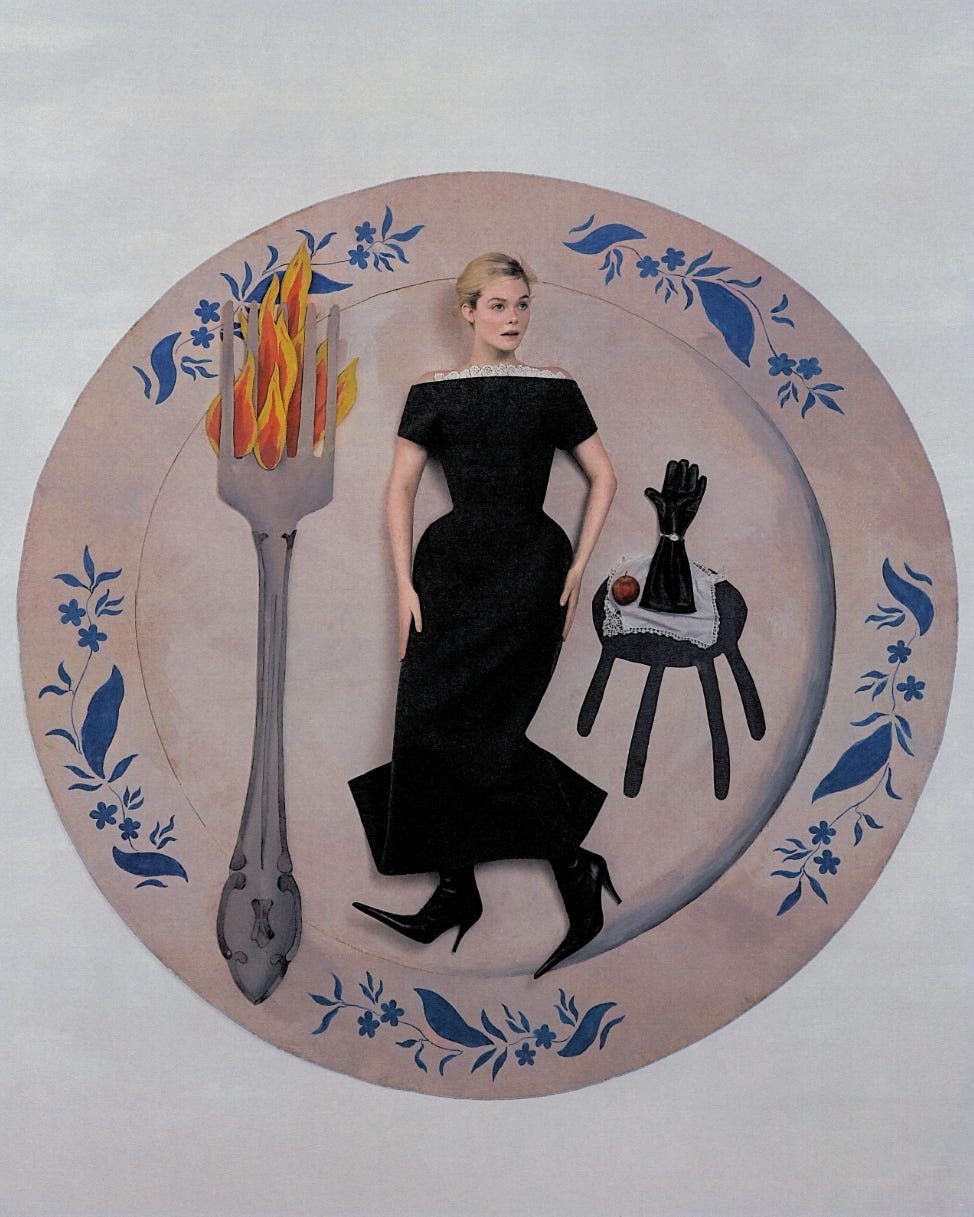
Like you and Nikki Glaser, we’ve been doing the reading on CBS News under new editor-in-chief Bari Weiss, and it’s been making us tired (amongst a whole spectrum of darker feelings). But we perked up when we saw that the New Yorker’s big feature on the Eye Network and its bespectacled queen was by Clare Malone, a media reporter who always follows the exact tentacles of a story that most interest us. Just as we hoped—in addition to hitting the full Bari bio; the recent, bumpy plight of CBS News; and the chaotic state of media in general (no small order!)—Malone delivers a personality portrait of Weiss. Among the most illuminating and satisfying descriptors of BW she collected:
“values driven”
“deep commitment to her own advancement”
“If you’re really getting down to work and you’re Bari Weiss, you’re putting on a collared shirt.”
“She was intoxicating, superficially conversant in a number of different directions, and she would name-drop adults of heft.”
“She has a bubbly, vivacious personality, that kind of Bill Clinton effect, where she makes you feel like you’re the only person who matters in a room.”
At the New York Times, “Most of us found her conniving….A lot of things she was saying we were at least open to. It was the way she was saying it, and the way that she was trampling on the rest of us, that I think ate at us.”
“She was so brilliant and charismatic, and if she’d started a church we all would have joined.”
“She’s really good at a honeymoon and really bad at marriage.”
“She needs to take her job a little bit more seriously.”
“You know that phrase ‘generational talent?’ She’s really that good. I think she’s more ambitious than the great Tina Brown, if that’s even possible.”
Read “Inside Bari Weiss’s Hostile Takeover of CBS News” here.
Boogie Nights
And the Spready Award for the winning-est Beckham Family Meltdown Meme
